
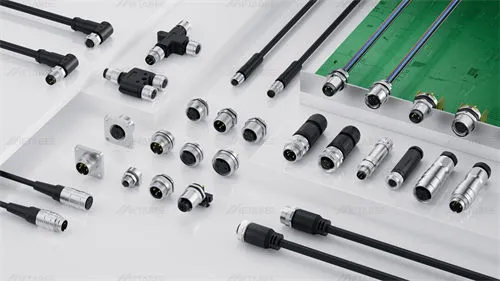
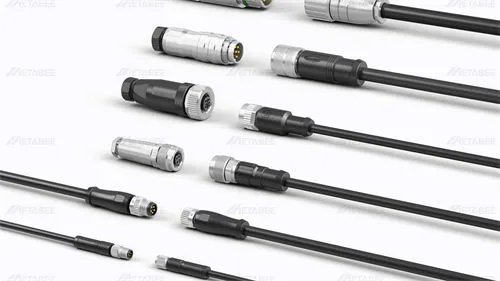
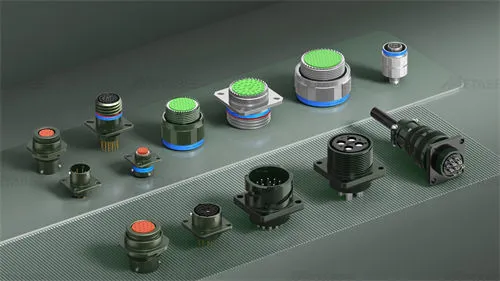
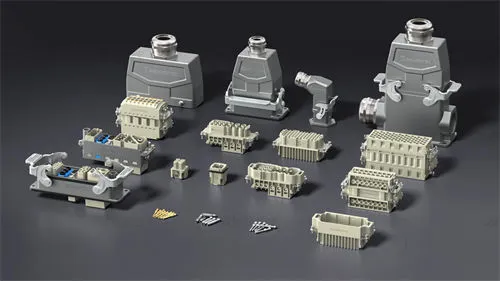
Military circular connectors are critical components in aerospace, defense, industrial automation, and rugged electronic systems where reliability is essential. Among the most widely used military connector standards, the MIL-DTL-26482 series is known for its compact size, quick-disconnect bayonet coupling, and strong environmental resistance. This guide explains the structure, series classifications, part numbers, specifications, applications, and selection considerations of MIL-DTL-26482 connectors, including the commonly used MS3112 and MS3116 connector types.
What Is an MIL-DTL-26482 Connector?
Definition, History, and Development
An MIL-DTL-26482 connector (formerly known as MIL-C-26482) is a family of military-spec miniature circular, environment-resistant, 3-point bayonet coupling connectors. The specification defines two primary connector families: Series I connectors and Series II connectors.
Developed in the mid-20th century, the original MIL-C-26482 specification was created to overcome the size, weight, and environmental limitations of the earlier MIL-C-5015 series to meet the growing demands of modern military aircraft and tactical ground systems.
Over the decades, continuous revision and improvement led to the current MIL-DTL-26482 designation. The transition from “MIL-C” to “MIL-DTL” occurred as part of a broader DoD initiative in the 1990s to standardize specification nomenclature. Today, MIL-DTL-26482 connectors are manufactured by dozens of qualified suppliers worldwide and are used in virtually every domain of military electronics, as well as in demanding commercial applications where high reliability is paramount.

Standards
- A hierarchy of specifications and associated standards govern MIL-DTL-26482 connectors:
- MIL-DTL-26482H: It defines the mechanical, electrical, environmental, and dimensional requirements for MIL-DTL-26482 Series I and Series II connectors.
- SAE AS50881 does not directly define connector construction, but it establishes requirements for electrical wiring interconnection systems (EWIS) used in aircraft.
- AS85049—Covers accessories (backshells, strain reliefs, and conduit fittings) designed for use with circular connectors, including MIL-DTL-26482.
- MIL-STD-1130 establishes requirements for solderless wrapped electrical connections used in military electronic equipment.
- SAE AS22520 is the industry-standard specification governing crimping tools used for aerospace and military electrical contacts.
Key Features
MIL-DTL-26482 connectors offer a distinctive combination of features that differentiate them from both commercial circular connectors and other military connector families:
- Compact and Lightweight Design—MIL-DTL-26482 connectors are significantly smaller and lighter than many traditional military circular connectors, making them ideal for aerospace and portable equipment.
- Bayonet Coupling Mechanism—The three-point bayonet coupling mechanism enables fast mating and unmating while maintaining strong vibration resistance.
- Wide Range of Shell Sizes and Insert Arrangements—Available in multiple shell sizes (from size 8 to size 20) and a broad range of insert arrangements accommodating from 2 to 61 contacts, the family covers a vast spectrum of signal and power needs.
- Environmental Sealing—Connectors are designed to provide IP67-equivalent sealing when properly mated, protecting against moisture, dust, sand, and other environmental contaminants.
- Versatile Mounting Options—Available in narrow-flange, wide-flange, cable-connecting, and jam-nut receptacle styles.
- High-Temperature Performance—Standard versions are rated for continuous operation from −65°C to +125°C, with special high-temperature variants available for more demanding environments.
MIL-DTL-26482 Series Explained
The MIL-DTL-26482 standard is divided into two distinct series: Series I and Series II. While they share the same mating interfaces for identical insert arrangements, their internal constructions, contact types, and backend accessories differ significantly.
Series 1 Connectors
Series 1 connectors feature solder-type contacts and are primarily intended for wire termination via soldering. This contact provides a reliable, permanent termination method well-suited for applications where connectors will remain in service for extended periods without frequent field replacement. Part numbers are typically designated as MS3110, MS3111, MS3112, MS3114, MS3116, and MS3118. So they are widely used in avionic subsystems, ground support equipment, shipboard electronics, and industrial machinery.
Key characteristics of Series 1 connectors include:
- Solder termination for signal and power contacts
- Rear-release contact retention in most configurations
- Available in both plug and receptacle configurations, including wall-mount, jam nut, and solder-mount receptacles
- Shell sizes ranging from 8 to 20, with multiple insert arrangements per size

MIL-DTL-26482 Series 1 Catalog
Please access our full technical catalog for detailed specifications, part number breakdown, and dimensional drawings of Series I connectors.
Download 2026 Series 1 Catalog(No registration required)

Need Help Choosing the Right Part number?
If you are not sure which Series I MIL-DTL-26482 connector fits your application, our engineering team can assist you with fast selection support and quotation within 24 hours.
Contact us for technical support or RFQ assistance
Series 2 Connectors
Series 2 connectors are designed for crimp termination, using removable crimp contacts that can be inserted and extracted from the connector insert using standard tooling. This makes Series 2 connectors significantly more field-serviceable than Series 1. Part numbers following the MS3470, MS3471, MS3472, and MS3474 series conventions.
Key characteristics of Series 2 connectors include:
- Crimp termination using removable contacts (front-release or rear-release depending on design)
- Contacts are interchangeable with those used in other military connector families sharing the same insert arrangements
- Wider wire gauge acceptance range compared to solder-type contacts
- Preferred for applications requiring field maintenance or frequent reconfiguration
- Same shell sizes and bayonet coupling as Series 1, ensuring dimensional compatibility
Differences Between Series 1 and Series 2
Solder contacts and crimp contacts are the key technical difference within the MIL-DTL-26482 series. The transition from solder contacts to crimp contacts represents the single most important technological advancement between MIL-DTL-26482 Series I and Series II connectors.
Solder Contacts (Series I)
In solder-type connectors, the conductor is permanently attached to the contact using molten solder. In addition, this method creates a fixed electrical connection between the wire and the contact termination cup.
Crimp Contacts (Series II)
Crimp contacts use a mechanical compression process to permanently bond the conductor to the contact barrel using precision crimping tools. Instead of melting solder, the crimping process creates a gas-tight mechanical and electrical connection between the wire strands and contact.
Key Differences of MIL-DTL-26482 Series 1 vs Series 2
| Feature | Series 1 | Series 2 |
| Contact Termination | Solder | Crimp |
| Contact Removal | Limited | Rear removable |
| Maintenance | More difficult | Easier |
| Assembly Method | Manual soldering | Crimp tooling |
| Environmental Performance | Good | Enhanced |
| Applications | Permanent installations, avionics | Field equipment, vehicles, portable systems |
| Cost | lower | Higher |
Common MIL-DTL-26482 Series I Connector Part Numbers
Navigating Military Standard (MS) part numbers is essential for accurate sourcing. Series I part numbers are characterized by specific prefixes that define the shell style.
Shell Styles
Series 1 encompasses six primary connector types, each serving a specific mounting or termination configuration.

Tips: Please see the catalog for details.
- MS3110 (Wall Mounting Receptacle): Designed for front-panel or rear-panel mounting with an integrated backshell accessory thread
- MS3111 (Cable Connecting Receptacle): It is suitable for extension cords or free-hanging inline cable extensions without panel mounting..
- MS3112 (Box Mounting Receptacle): MS3112 connectors are an receptacle for low-profile panel mounting. Furthermore, it does not include backshell accessory threads and is commonly installed inside sealed enclosures and protected equipment compartments.
- MS3114 (Jam Nut Receptacle): MS3114 connectors feature a single-hole mounting with an O-ring seal and utilize a rear hex nut, ideal for quick installation and superior panel sealing.
- MS3116 (Straight Plug): MS3116 is the standard cable plug used with MS3110, MS3111, MS3112, and MS3114 receptacles. Also, they have the coupling ring that mates with the receptacles listed above.
- MS3119 (Thru-Bulkhead Receptacle): This product enables the connection of two cable plugs in order to pass a signal through a panel or bulkhead. In terms of construction, the MS3119 contains double-ended pin and socket contacts and features a KPT socket insert with non-removable contacts.

Service Class
In the MIL-DTL-26482 specification, the Class designation defines the environmental sealing method, cable termination style, and overall connector protection capability.Different classes are responsible for different operating conditions, including moisture resistance, vibration resistance, hermetic sealing, and cable strain protection. For example, in the part number MS3116F20-41P, the letter “F” represents the connector class.

Summary of MIL-DTL-26482 Class Types:
| Class | Sealing Type | Typical Use |
| A | Non-Environmental | Indoor/general-duty |
| E | Grommet seal | Harsh environments |
| F | Grommet + strain relief | Vibration applications |
| J | Cable jacket gland seal | Jacketed cables |
| P | Potting seal | Extreme environments |
Remark:
- Class A, E, and F are the ones we encounter most often. Grades J and P are less common.
- MS3112 and MS3114 have PCB versions.
- MS3112 and MS3119 are only available in E grade.
Available Shell Sizes and Insert Arrangements
Shell Sizes
MIL-DTL-26482 connectors are available in multiple shell sizes, each of which accommodates specific insert arrangements. These arrangements, in turn, define the contact numbers, contact sizes, and power/signal combinations of the connectors. Specifically, shell sizes are designated by a number, ranging from 8, 10, 12, 14, 16, 18, 20, 22, up to 24.
MIL DTL 26482 Insert Arrangements
Connector insert layouts are identified by arrangement numbers such as the following:10-6, 14-19, 18-32; Insert arrangements to determine number of contacts, contact size, pin layout, and current capability.

Tips: For more information, please refer to the catalog.
Main Components of a MIL-DTL-26482 Connector
Understanding the physical construction of a MIL-DTL-26482 connector is essential for proper installation, maintenance, and specification. To that end, each connector consists of four key components, with each serving a specific structural or functional role.
Connector Shell
The shell provides the mechanical structure and environmental protection of the connector. Common shell materials include aluminum alloy, stainless steel, and composite materials. Typical finishes include olive drab cadmium and Black Over Zinc Plating. The shell also provides EMI shielding and grounding functionality.
Contacts
MIL-DTL-26482 connectors use either solder or crimp contacts, depending on the connector series, and are available in both pin (male) and socket (female) configurations. In addition, copper alloy with gold plating typically forms the contacts, ensuring low contact resistance, excellent corrosion resistance, and long mating life.
Inserts&Insulator and Keyways
The insert is the insulated component that holds contacts in position. Manufacturers design insert materials to provide high dielectric strength, heat resistance, and mechanical durability. To prevent cross-mating when engineers use multiple identical connectors side-by-side, precision-machined master and alternate keyways (W, X, Y, Z positions) on the shells rotate the insert relative to the shell.
Coupling Mechanism
MIL-DTL-26482 connectors use a bayonet coupling system. nlike threaded coupling (used in MIL-DTL-5015 and MIL-DTL-38999 Series I/II), users can engage and disengage the bayonet lock with a simple quarter-turn rotation. Benefits include fast connection, secure locking, excellent vibration resistance, and easy field operation.

Component and material, plating of MIL-DTL-26482 connectors:
| Component | Material | Plating |
| Connector Shell | Aluminum alloy | Olive Drab Cadmium/Black Over Zinc Plating |
| Contact | Copper Alloy | Gold Plating |
| Insulator | Synthetic rubber | – |
MIL-DTL-26482 Technical Specifications
The following table summarizes the key electrical and mechanical, and Environmental performance performance for standard MIL-DTL-26482 connectors:
| Specification | Typical Value |
| Coupling Method | Bayonet |
| Shell Sizes | 8, 10,12, 14, 16, 18, 20, 22, 24 |
| Contact Sizes | #20, #16, #12 |
| Current Rating | #20: 7.5A, #16: 13A, #12: 23A |
| Operating Voltage | Service Rating 1: 600V AC Service Rating 2: 1,000V AC |
| Dielectric Withstanding Voltage | Up to 1,500 VAC for Service 1 2,300 VAC for Service 2 |
| Insulation Resistance | 5000M Ohms (at 500V DC) |
| Operating Temperature | -55°C to + 125°C |
| Mating Cycles | ≥500 Cycles |
| Vibration Resistance | MIL-STD-202 Method 204, up to 20g |
| Shock Resistance | MIL-STD-202 Method 213, up to 100g |
Common Applications
The versatility, small form factor, and environmental resilience of MIL-DTL-26482 connectors make them standard choices across multiple sectors:
- Military Aerospace: Avionics systems, flight control panels, and ground support equipment.
- Defense Systems: Tactical field communications, radar installations, and missile guidance arrays.
- Industrial Automation: Sensor arrays, robotic arms, and factory floor power distribution.
- Marine & Oil/Gas: Geophysical exploration tools, offshore control units, and shipboard systems.
- Medical Equipment: Ruggedized mobile diagnostic systems and field hospital power connections.

Limitations and Considerations
Although MIL-DTL-26482 connectors offer many advantages, several limitations require careful consideration.
- Limited Contact Count at Small Shell Sizes: The smaller shell sizes (8 and 10) accommodate relatively few contacts—typically 2 to 10. Thus, it does not fit applications requiring high contact density at small diameters.
- No Intermatability Across Series: Standard Series I plugs will not pair with Series II receptacles, risking component damage if mixed up on production lines.
- Solder Contact Complexity: Series I solder contacts require skilled manual assembly and are less suitable for high-volume automated production.
- Environmental Limits: MIL-DTL-26482 connectors may not provide the same high-performance sealing and EMI protection as newer military connector families.
- RoHS Cadmium Constraints: Traditional olive drab cadmium plating faces restricted use in specific regions due to environmental regulations (RoHS/REACH compliance).
- Cost Considerations: Genuine military-qualified connectors can be relatively expensive due to military certification, precision manufacturing, specialized materials.
MIL-DTL-26482 vs MIL-DTL-38999 vs MIL-DTL-5015
MIL-DTL-26482, MIL-DTL-38999, and MIL-DTL-5015 are three of the most common military circular connectors, and each has distinct characteristics that make it more or less suitable for specific applications. Therefore, understanding these differences is essential for proper connector family selection.
MIL-DTL-26482 vs MIL-DTL-38999
MIL-DTL-38999 is the highest-performance military circular connector standard currently in widespread use, available in four series (Series I through IV) with different coupling mechanisms.
- Coupling: 26482 uses a standard bayonet lock; 38999 utilizes high-vibration threaded coupling, breech locks, or rapid bayonet designs.
- Density: 38999 offers much higher contact density (Series III accommodates up to 128 contacts using ultra-miniature size 22 pins).
- Harsh Environments: 38999 is the gold standard for high-vibration aerospace environments and features built-in EMI grounding fingers; 26482 is more compact and economical for moderate military and heavy industrial applications.

Quick Key Difference Comparison Table:
| Feature | MIL-DTL-26482 | MIL-DTL-38999 |
| Coupling Type | Bayonet | Bayonet / Threaded / Breech-lock |
| Shell size | 8, 10,12, 14, 16, 18, 20, 22, 24 | 9, 11, 13, 15, 17, 19, 21, 23, 25 |
| Contact Density | Medium | High |
| Contact Count | Up to 61 | Up to 128 |
| EMI Shielding | Good | Excellent |
| Temperature Range | -55°C to + 125°C | -65℃ to +200℃ |
| Cost | Lower | Higher |
| Applications | Industrial & legacy military | Modern aerospace & defense |
MIL-DTL-26482 vs MIL-DTL-5015
MIL-DTL-5015 (formerly MIL-C-5015) is one of the oldest and most established military circular connector families, characterized by its large, rugged construction and threaded coupling.
- Size and Weight: 5015 is a heavy-duty, large-shell connector; 26482 is a miniature connector series designed to save space and weight.
- Coupling: 5015 primarily utilizes a fine-threaded screw coupling mechanism, making it slower to mate/unmate compared to the120°c rapid bayonet of the 26482.
- Application: 5015 is typically utilized for high-current power distribution; 26482 is preferred for low-to-medium power and dense signal pathways.
Quick Key Difference Comparison Table:
| Feature | MIL-DTL-26482 | MIL-DTL-5015 |
| Coupling Type | Bayonet | Threaded |
| Shell Sizes | 8(8-24) | 14 (8-48) |
| Contact Density | Higher | Lower |
| Contact Count | Up to 61 | Up to 100 |
| Temperature Range | -55°C to + 125°C | -55°C to + 125°C |
| Vibration Resistance | Good | Excellent mechanical robustness |
| Weight | Lightweight | Heavy-duty |
| Cost | Moderate | Lower |
| Applications | Aerospace & electronics | Power & industrial systems |
How to Select the Right MIL-DTL-26482 Connector
To construct an accurate part number or submit an effective RFQ (Request for Quote), determine the following parameters step-by-step:
Step 1: Determine the Number and Type of Circuits
Identify the number of circuits, signal type (signal/power/RF), voltage, and current requirements.
Step 2: Select Contact Size Based on Current Requirements
Select contact sizes according to current capacity and derating requirements. Mixed power and signal contacts can be used if needed.
Step 3: Select Shell Size Based on Contact Count and Arrangement
Choose the smallest shell size that supports the required contact arrangement to minimize weight and space.
Step 4: Choose Series 1 or Series 2 Based on Termination
Choose the smallest shell size that supports the required contact arrangement to minimize weight and space.
- Series 1: Solder contacts for permanent connections
- Series 2: Crimp contacts for field maintenance and easy replacement
Step 5: Select the Appropriate Connector Type (Receptacle vs. Plug)
- Receptacles: MS3110, MS3111, MS3112
- Plugs: MS3116 (straight) or MS3118 (right-angle)
Step 6: Select Shell Material and Plating
Consider the operating environment:
- Cadmium-plated aluminum for standard military use
- Nickel or zinc-nickel for RoHS/commercial environments
- Stainless steel for harsh corrosive environments
Step 7: Verify Environmental Requirements
Confirm temperature, sealing, vibration, shock, and altitude requirements.
Step 8: Check QPL Status and Sourcing
Verify the connector is sourced from QPL-approved manufacturers for military compliance.
Leading Manufacturers and Suppliers
Amphenol is one of the leading manufacturers of MIL-DTL-26482 connectors, offering reliable Series I and Series II products for aerospace, defense, and industrial equipment.
- Amphenol: One of the world’s largest military circular connector manufacturers. Their products are widely used in defense programs worldwide, and they offer an extensive range of accessories and backshells compatible with MIL-DTL-26482 connectors.
- TE Connectivity (Deutsch): Offers a comprehensive MIL-DTL-26482 product line under their Deutsch brand and other product lines.
- ITT Cannon: A pioneering manufacturer of military circular connectors, ITT Cannon has manufactured MIL-DTL-26482 connectors since the early years of the specification. Their products are used extensively in US and NATO military programs.
- Souriau/Eaton: A major European manufacturer of military circular connectors with strong QPL-qualified MIL-DTL-26482 offerings, widely used in European defense programs and NATO-standardized equipment.
- Renhotec: Supplies MIL-DTL-26482 compatible circular connectors, cable assemblies, and customized interconnect solutions for industrial and military applications.
- Metabee: As an emerging, well-known connector manufacturer, we manufacture various rugged circular connectors for defense and industrial applications.
Conclusion
MIL-DTL-26482 connectors remain one of the most important military circular connector standards in aerospace, defense, industrial, and transportation applications.Their compact size, bayonet coupling system, rugged construction, and environmental resistance make them highly suitable for harsh operating environments. Series I connectors such as MS3112 and MS3116 continue to be widely used in legacy and industrial systems, while Series II connectors provide improved crimp-contact performance for modern applications. Understanding shell types, insert arrangements, specifications, and application requirements is essential when selecting the correct MIL-DTL-26482 connector for a project.
If you are sourcing MIL-DTL-26482 connectors, our engineering team provides professional technical support to help you identify the most suitable solution based on your application requirements.
What We Provide:
- Fast RFQ response within 24 hours
- Technical datasheets and dimensional drawings
- MIL-DTL-26482 Series I part number cross-reference support
- Engineering selection guidance based on electrical and environmental requirements
- OEM/ODM customization for shell, insert, contact arrangement, and cable assembly
- Sample support for qualification and testing
- Stable long-term supply for production and aftermarket requirements
Contact us today to get expert advice and request a quotation for your MIL-DTL-26482 connector requirements.
Related Products
- MIL-DTL-26482 Connectors
- MS3116 Straight Plugs
- MS3112 Box Mounting Receptacles
- MS3114 Jam Nut Receptacles
- MIL-DTL-5015 Connectors
- MIL-DTL-38999 Connectors
FAQs
Q1:What is the difference between MS3112 and MS3116?
A:MS3112 is a box mount receptacle, while MS3116 is a straight cable plug designed to mate with it.
Q2: What is the difference between Series I and Series II?
A: Series I primarily uses solder contacts, while Series II uses crimp removable contacts with improved performance.
Q3: Are Series I and Series II connectors intermateable?
A: Yes. If they share the same shell size and insert arrangement, a Series I plug will mechanically mate with a Series II receptacle, and vice versa. However, they cannot share backshell hardware or contacts.
Q4: Can I use a Series I plug with a Series II receptacle?
A: No. While the outer bayonet dimensions are similar, the inner structural geometry, contact seating heights, and pinning arrangements do not align correctly. Intermating them will compromise environmental seals and cause electrical pin damage.
Q5: Are MIL-DTL-26482 connectors interchangeable between manufacturers?
A: Yes. Qualified manufacturers follow the MIL specification, allowing compatible mating between compliant brands.
Q6: Are MIL-DTL-26482 connectors waterproof?
A: They are environmentally resistant and sealed against moisture and contaminants, but waterproof ratings depend on the specific connector class and installation.
Q7: What industries use MIL-DTL-26482 connectors?
A: Industries include:
- Aerospace
- Defense
- Marine
- Industrial automation
- Transportation
Q8: Can I request customized pin configurations or cable assemblies for Series 1?
A: Absolutely. Beyond our standard catalog items, we offer rapid customization for specific pin layouts, over-molding, and wire harnesses. Welcome to contact us.
Q9: How can I get a sample for prototyping, and what is the standard lead time?
A: We support your R&D phase with fast-track sampling. For bulk orders, our expected delivery time is 3–4 weeks. If you need Series 1 samples, please contact our team or leave a message through our live chat for further communication.
