
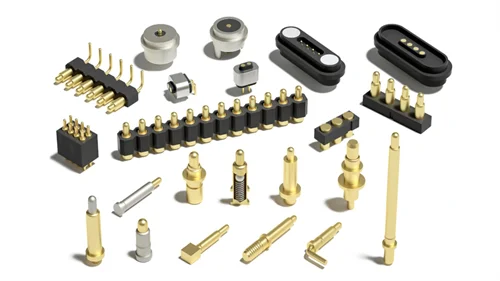
Pogo pins come in various designs to meet different mechanical and electrical requirements. Although they share the same basic spring-loaded contact principle, different types can have different structures, sizes, current ratings, and special features.
Engineers usually classify pogo pins based on several factors, including mounting method, electrical performance, and physical dimensions. These categories help compare different designs and make it easier to select the right pogo pin for specific applications.
This guide introduces the main types of pogo pins and explains their key differences based on their design characteristics and performance requirements.
Introduction
A pogo pin, also known as a spring-loaded pin or spring-loaded contact pin, is a compact electrical contact that uses spring force to maintain a stable connection between two conductive surfaces.
When the pin is compressed, the internal spring creates consistent contact pressure. This helps maintain reliable electrical and signal transmission during repeated mating cycles. Compared with traditional fixed contacts, pogo pins offer low contact resistance, high durability, and excellent mating cycle performance.
Their compact design and reliable performance make pogo pins suitable for applications that require frequent connection and disconnection. Different requirements for installation, space, and electrical performance have resulted in various pogo pin designs.
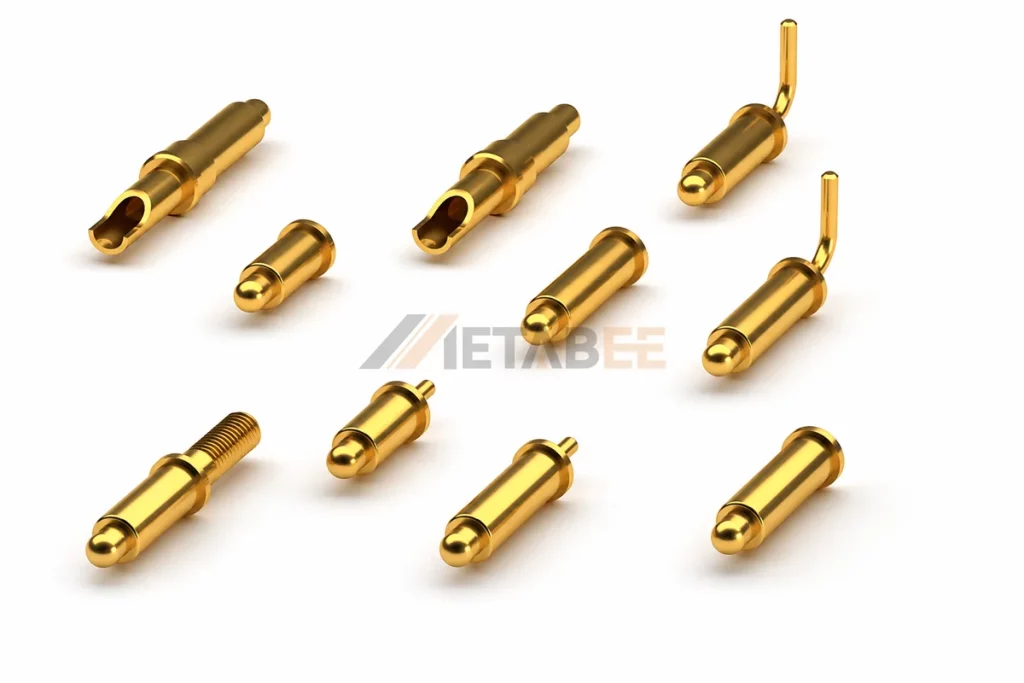
Pogo Pin Types Overview: How They Are Classified?
There is no universally accepted classification standard for pogo pins. Different manufacturers and engineers may classify pogo pins based on their own design criteria and application requirements.
In this article, pogo pins are classified into four main categories based on common design features and selection factors:
- Mounting method: Classified by how the pogo pin is installed, including SMT, through-hole, solder cup, right-angle, press-fit, and threaded pogo pins.
- Electrical performance: Classified by electrical requirements, such as high current, high voltage, and high frequency applications.
- Size: Classified by physical characteristics, including micro, low profile, and custom size pogo pins.
- Special design features: Classified by additional structures developed for specific applications, such as rolling, double-ended, and waterproof pogo pins.
A single pogo pin may belong to multiple categories. For example, a pogo pin can be classified as a micro pogo pin based on its compact size and an SMT pogo pin based on its mounting method.
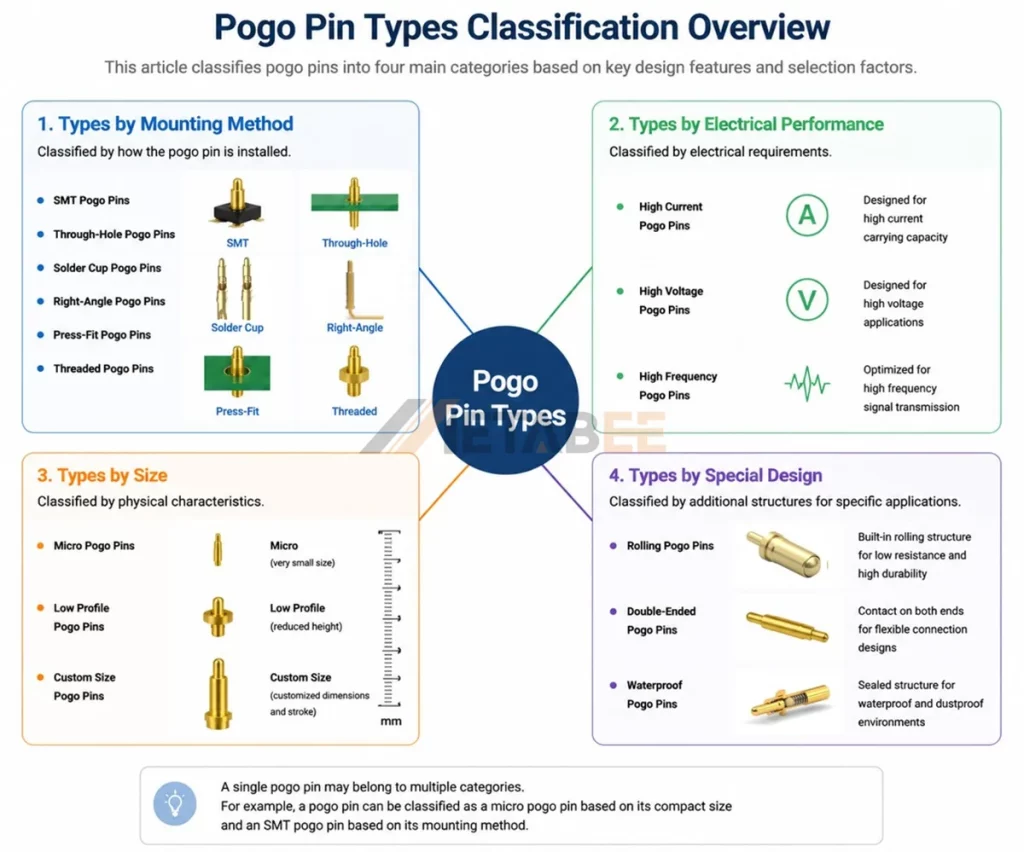
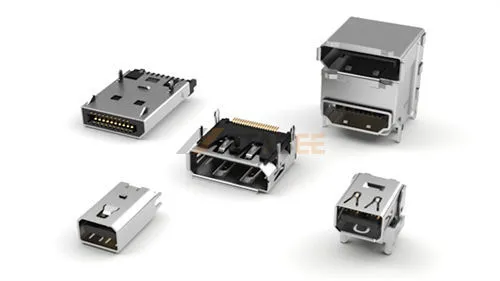
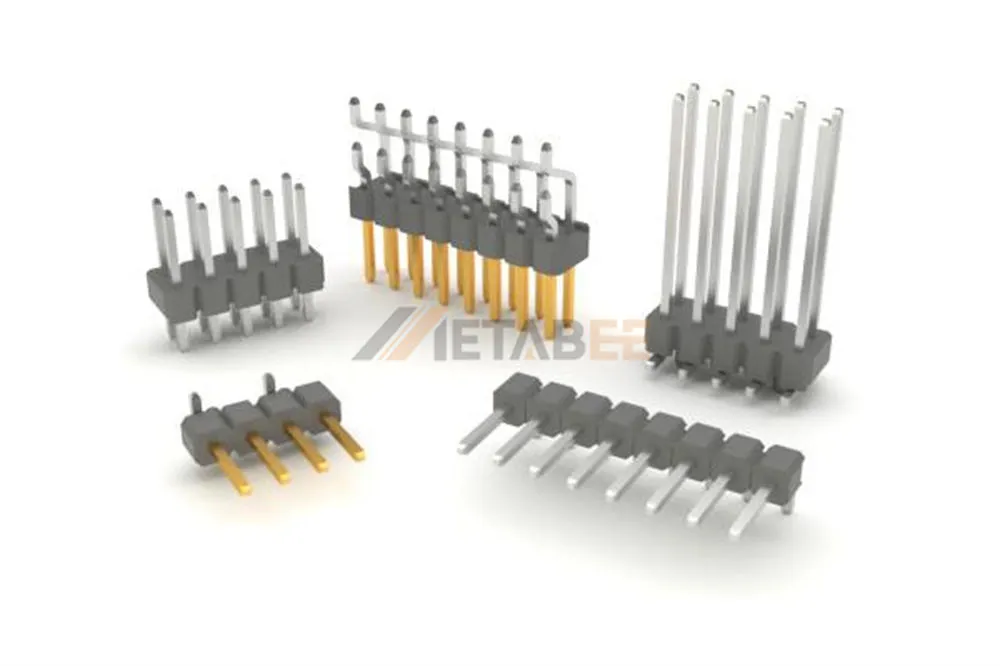
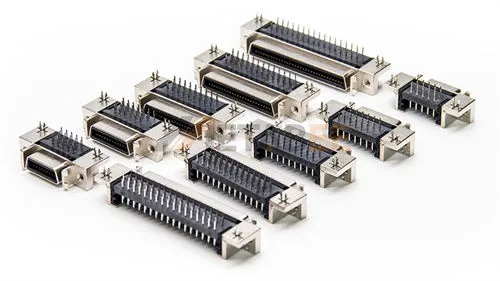
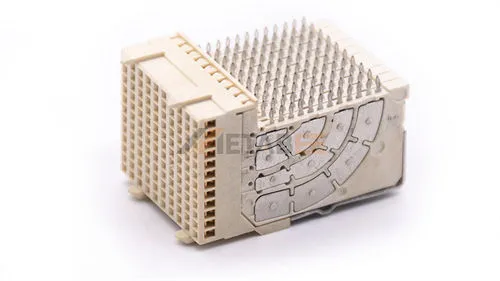
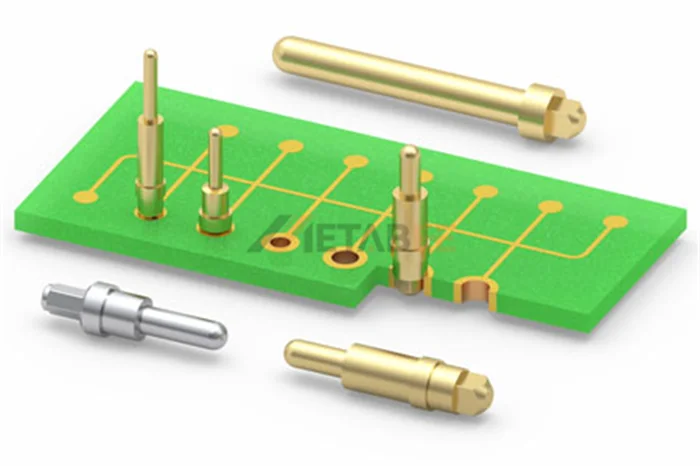
Different pogo pin types have different structures and mounting designs. The following image shows some common pogo pin structures for quick comparison.
Common Pogo Pin Structures
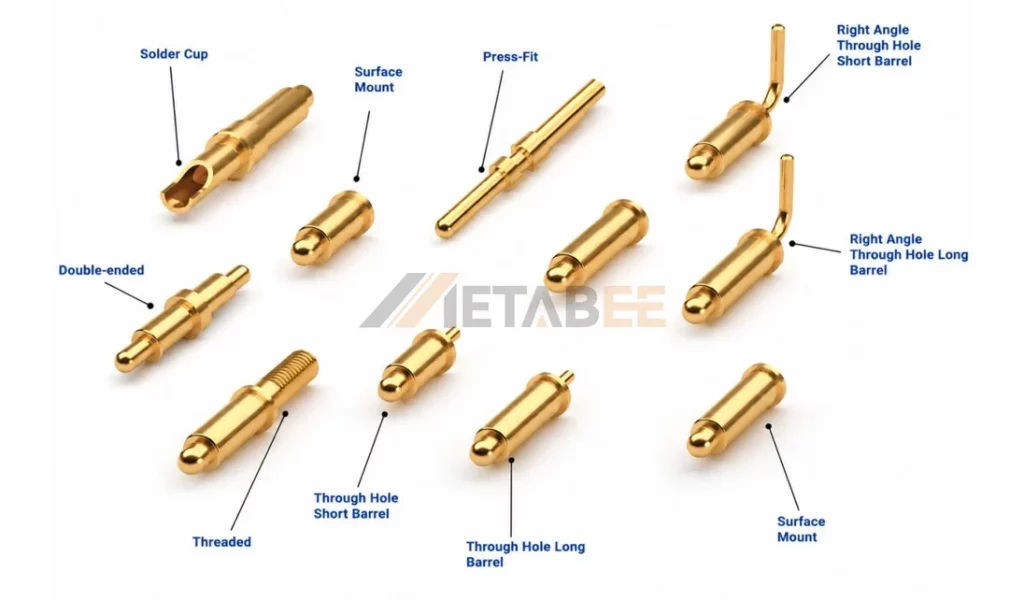
Types by Mounting Method
Pogo pins are commonly used as PCB pogo pins when they need to be integrated with printed circuit boards. Different mounting methods, including SMT and through-hole designs, provide different solutions for PCB assembly and mechanical requirements.
| Pogo pin type | Mounting method | Key features | Typical applications |
|---|---|---|---|
| SMT pogo pins | Surface mount soldering | Suitable for automated PCB assembly with compact design | Consumer electronics, test fixtures, charging contacts |
| Through-hole pogo pins | Through-hole soldering | Provides stronger mechanical support and higher stability | Industrial equipment, PCB connectors, testing devices |
| Solder cup pogo pins | Wire soldering | Allows direct cable connection and flexible wiring options | Cable assemblies, custom connection solutions |
| Right-angle pogo pins | Horizontal SMT or through-hole mounting | Designed for side-entry connections and limited vertical space | Compact devices, edge connectors, test equipment |
| Press-fit pogo pins | Press-fit installation without soldering | Easy assembly and replacement with good mechanical stability | Test fixtures, removable contact modules |
| Threaded pogo pins | Threaded mounting | Secure installation with screw fastening and easy maintenance | Industrial equipment, custom fixtures |
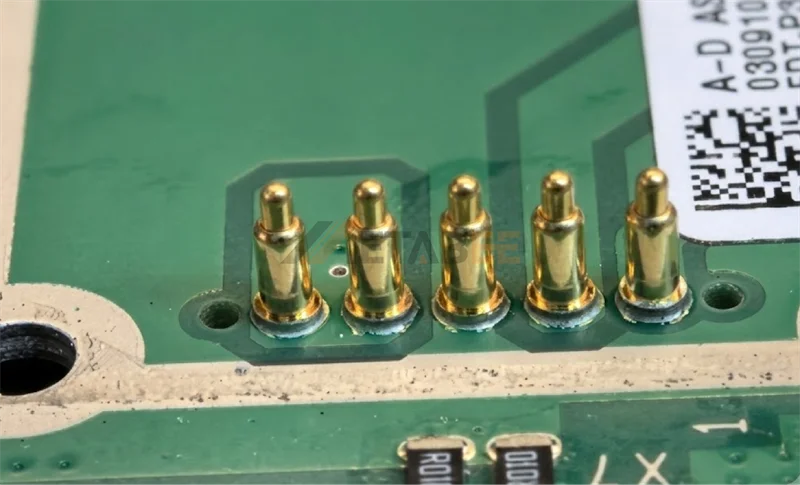
SMT (Surface Mount) Pogo Pins
SMT pogo pins work well for compact PCB designs where space is limited. They mount directly on the PCB surface and support automated soldering processes such as reflow soldering.
Compared with through-hole designs, SMT pogo pins require less board space and fit well into compact electronic products. However, they usually need precise PCB layouts and may provide lower mechanical strength.
Advantages:
- Compact PCB layout
- Efficient automated assembly
- Suitable for high-volume production
Choose SMT pogo pins when you need a space-saving solution for compact electronic devices.
Through-Hole Pogo Pins
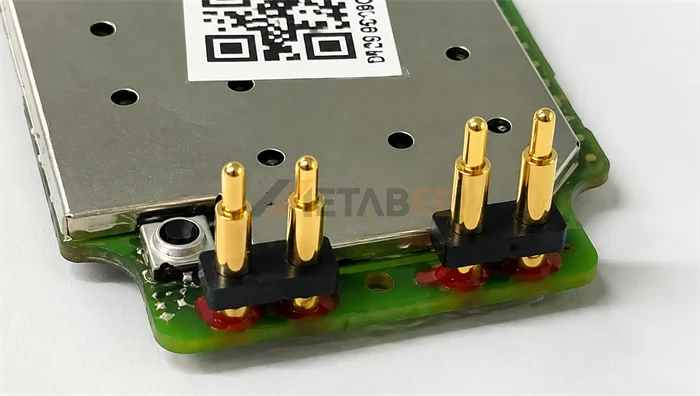
Through-hole pogo pins are one of the most common PCB mounting designs. They use through-hole technology, where the terminal extends through a PCB hole and connects to the board through soldering.
This structure provides strong mechanical retention and stable electrical contact. Compared with SMT pogo pins, through-hole designs usually handle mechanical stress better and work well for applications with frequent mating cycles. However, they require additional PCB space and drilling processes.
Advantages:
- Strong mechanical stability
- Suitable for repeated mating
- Reliable PCB connection
Choose through-hole pogo pins when durability and mechanical strength are key requirements.
Solder Cup Pogo Pins
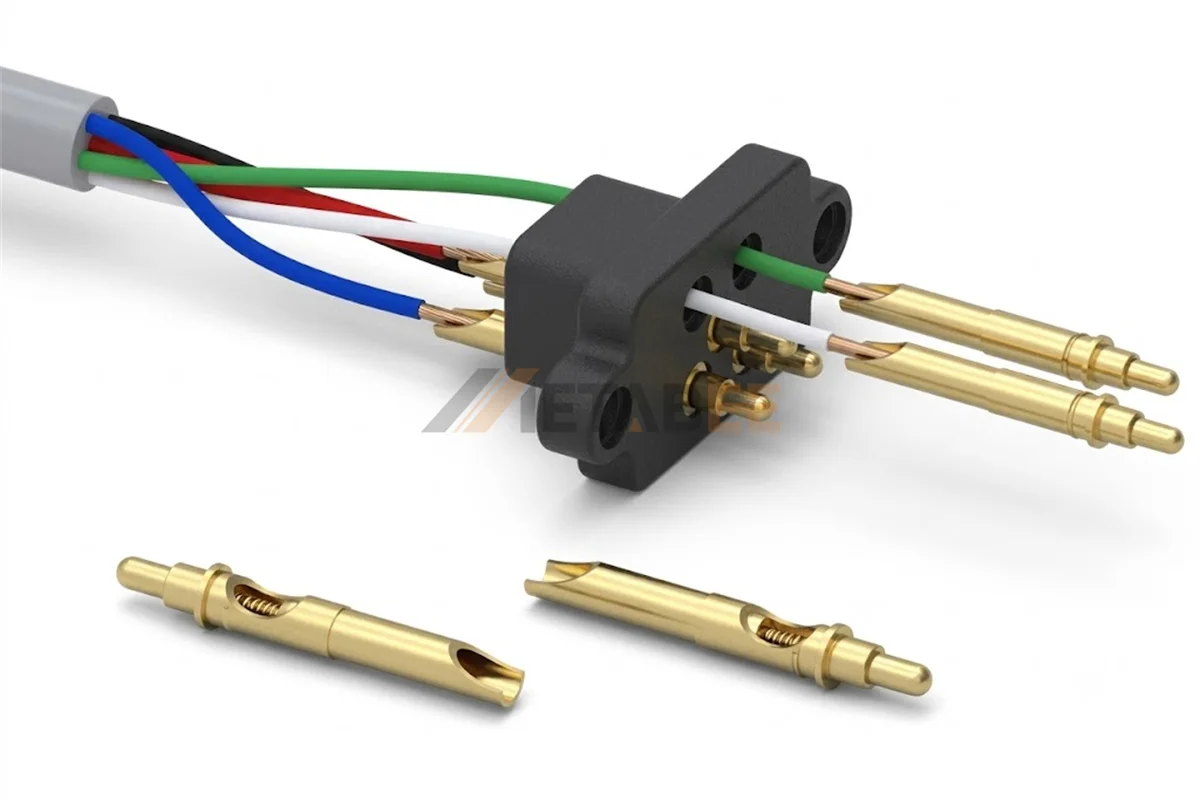
Solder cup pogo pins use a hollow terminal that allows direct wire soldering. They provide a flexible connection method for applications that do not require PCB mounting.
This design is useful for custom cable assemblies and special wiring requirements.
Advantages:
- Direct wire connection
- Flexible cable integration
- Suitable for custom assemblies
Choose solder cup pogo pins when you need to connect pogo pins with wires or cables.
Right-Angle Pogo Pins
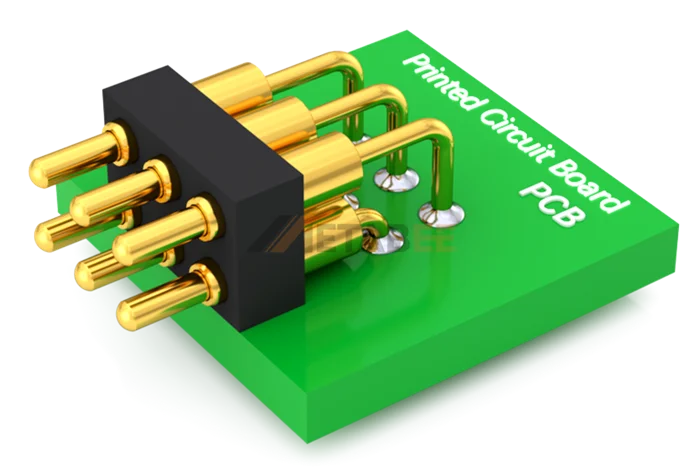
Right-angle pogo pins feature a 90-degree contact orientation, allowing the spring contact to connect from the side instead of vertically.
This design helps solve space limitations in compact assemblies where a standard vertical pogo pin cannot meet the required connection direction. It provides more flexibility for mechanical layout design.
Advantages:
- Side-contact connection
- Flexible installation direction
- Space-saving layout
Choose right-angle pogo pins when the mating direction requires a side connection.
Press-Fit Pogo Pins
Press-fit pogo pins use mechanical interference to secure the contact without soldering. They simplify assembly by eliminating the soldering process.
The mounting hole size must be carefully controlled to ensure proper retention and electrical performance.
Advantages:
- No soldering required
- Simple assembly
- Reliable mechanical fixation
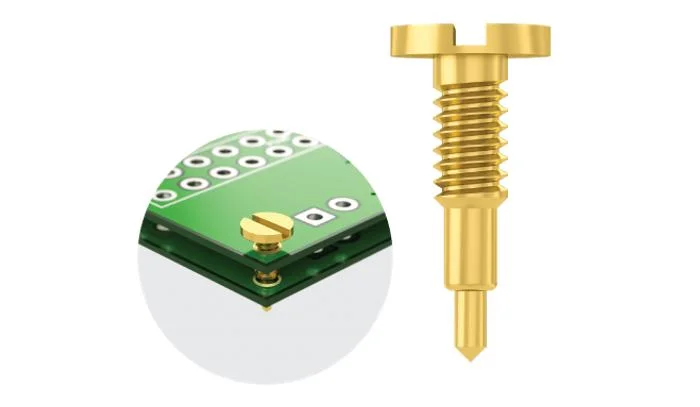
Threaded Pogo Pins
Threaded pogo pins use a threaded body to mount the contact to a panel or mechanical structure. They provide a secure solution for custom assemblies that require adjustable installation.
Advantages:
- Secure mechanical mounting
- Easy installation
- Flexible positioning
Check whether the device requires a DB9 male or DB9 female connector. Connector gender affects physical compatibility.
Types by Electrical Performance
The electrical performance of pogo pins determines whether they can meet the requirements of power transmission, voltage isolation, or high-speed signal testing. Different applications require different pogo pin designs to achieve reliable contact performance.
High Current Pogo Pins
High current pogo pins use optimized internal structures to improve current flow and contact stability. Compared with basic pogo pins, they may use additional contact elements, such as ball contacts, or enhanced barrel designs to increase the conductive path and reduce contact resistance.
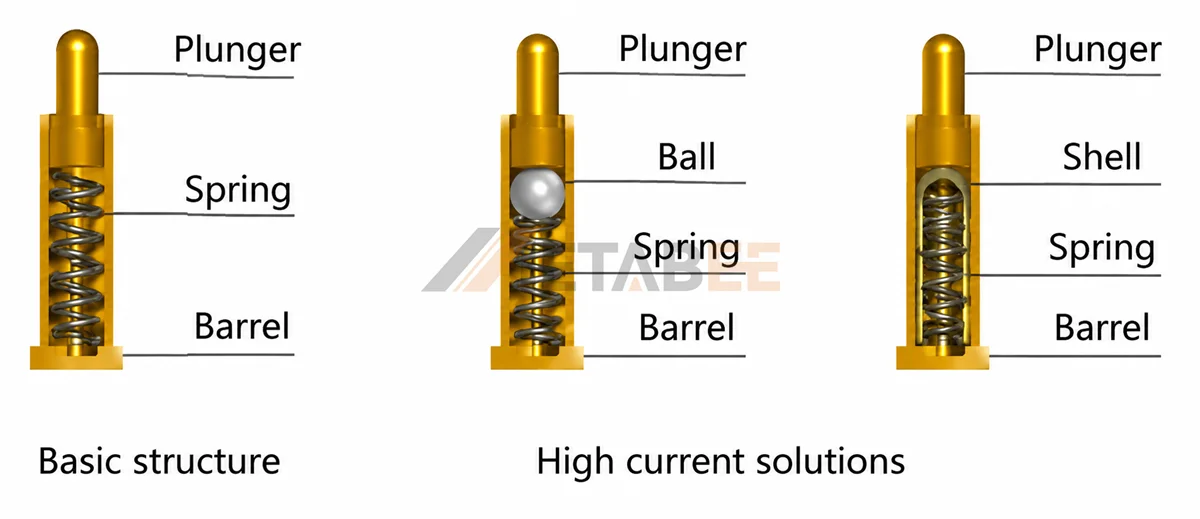
Key design features
- High current capacity: Supports higher power transmission requirements compared with standard pogo pins.
- Low contact resistance: Reduces power loss and heat generation during operation.
- Reliable contact performance: Maintains stable electrical connection after repeated mating cycles.
- Robust construction: Uses optimized contact structures and conductive materials for improved durability.
Selection factors
When choosing high current pogo pins, consider:
| Factor | Importance |
| Rated current | Ensures the pin meets power requirements |
| Contact resistance | Affects efficiency and temperature rise |
| Pin size | Influences current capacity |
| Mating cycles | Determines service life |
High Voltage Pogo Pins
High voltage pogo pins serve applications that require reliable electrical insulation and higher voltage resistance. Compared with standard pogo pins, they use optimized internal structures, improved insulation materials, and enhanced protection to prevent electrical breakdown.
Engineers commonly use them in high-voltage testing equipment, battery systems, and power electronics where stable contact performance is essential.
Key design features
- Thicker insulation sleeves
- Increased internal spacing
- Special plating
- Improved sealing structures
High frequency pogo pins
High frequency pogo pins optimize the plunger, barrel, and contact interface to create a more stable signal path. Compared with standard pogo pins, these designs reduce signal loss caused by contact variation and help maintain signal integrity during high-speed testing.
Typical applications
- RF module testing
- Antenna testing
- Semiconductor testing
- Communication device inspection
Types by Size
Pogo pins come in different sizes to meet different space requirements. The main difference lies in whether the design reduces the overall footprint, installation height, or requires customized dimensions.
| Type | Main difference | Typical applications |
| Micro pogo pins | Smaller diameter and compact contact size | Wearable devices, mini electronics, precision test fixtures |
| Low profile pogo pins | Reduced height and shorter overall size | Slim devices, compact PCB assemblies |
| Custom size pogo pins | Customized dimensions and specifications | OEM products, special equipment |
Micro Pogo Pins
Micro pogo pins use a smaller diameter and compact structure to fit applications with limited PCB space. Often available in diameters below standard pogo pins, with some miniature models around 0.3 mm to 1.5 mm. They help engineers achieve higher contact density while maintaining reliable electrical connections.
Key features:
- Small diameter
- Compact structure
- Precise contact design
When selecting micro pogo pins, engineers should consider:
- Diameter (mm) – determines whether the pin fits the available space.
- Working stroke (mm) – affects contact reliability under compression.
- Current rating (A) – ensures the pin meets electrical requirements.
Low Profile Pogo Pins
Low profile pogo pins use a shorter overall structure to fit applications with limited vertical space. There is no fixed industry standard for low profile pogo pins, but many models feature an overall length below 5 mm. They help engineers reduce product thickness while maintaining reliable spring contact performance.
Key features
- Reduced overall height: Fits thin devices where standard pogo pins cannot provide enough space efficiency.
- Shorter structure: Helps reduce the required installation depth.
- Compact contact design: Maintains reliable electrical contact in low-clearance applications.
When selecting low profile pogo pins, consider:
- Overall length (mm)
- Working stroke (mm)
- Spring force (gf)
Custom Size Pogo Pins
Custom size pogo pins provide solutions for applications where standard pogo pins cannot meet specific mechanical requirements.
Manufacturers can customize dimensions and performance specifications based on product requirements. Metabee provides custom pogo pin solutions with flexible options for dimensions, electrical performance, and mechanical requirements to support different application needs.
Common customization options include:
- Diameter (mm) – adjusted for different installation spaces.
- Length (mm) – modified for specific product structures.
- Working stroke (mm) – customized for different mechanical designs.
- Current rating (A) – adapted for different electrical requirements.
Types of Pogo Pins by Special Design
Double-Ended Pogo Pins
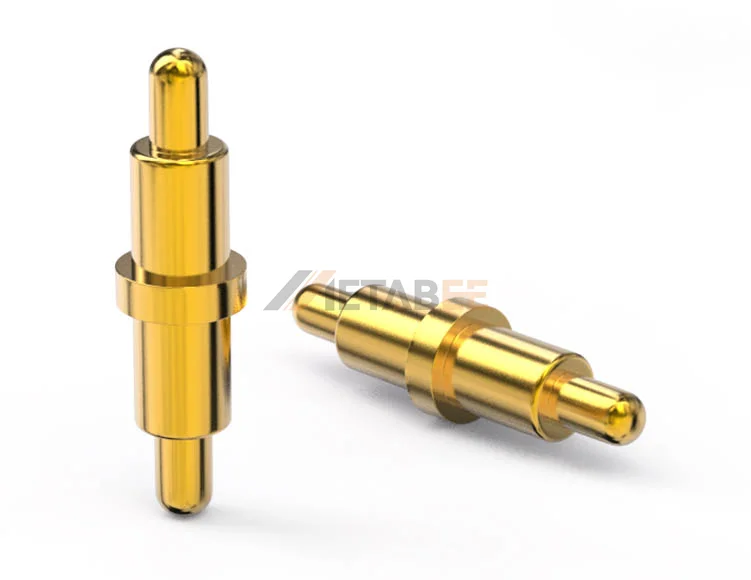
Double-ended pogo pins feature spring-loaded contacts on both ends, allowing electrical connections between two mating surfaces without a fixed mounting side. They typically use press-fit or socket mounting methods instead of SMT soldering, providing more flexibility for applications with limited space or movable contact points.
They are commonly used in battery contacts, charging devices, and test fixtures that require reliable connections between two components.
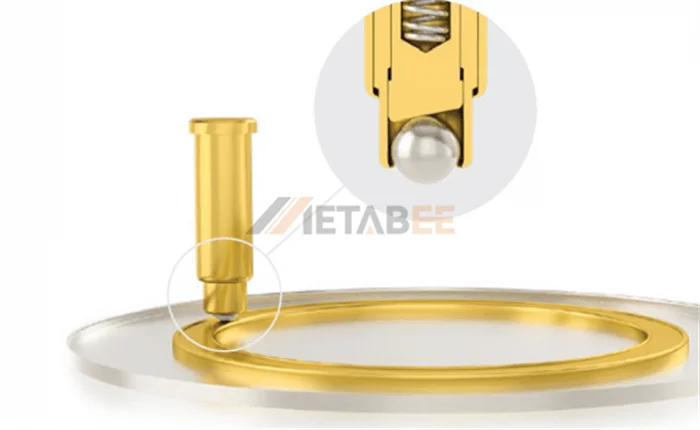
Rolling pogo pins
Rolling pogo pins use a rotating contact tip to reduce friction during sliding movement. They are designed for applications that require repeated contact movement and improved wear resistance.
They are commonly used in automated testing equipment and moving contact systems.
Waterproof Pogo Pins
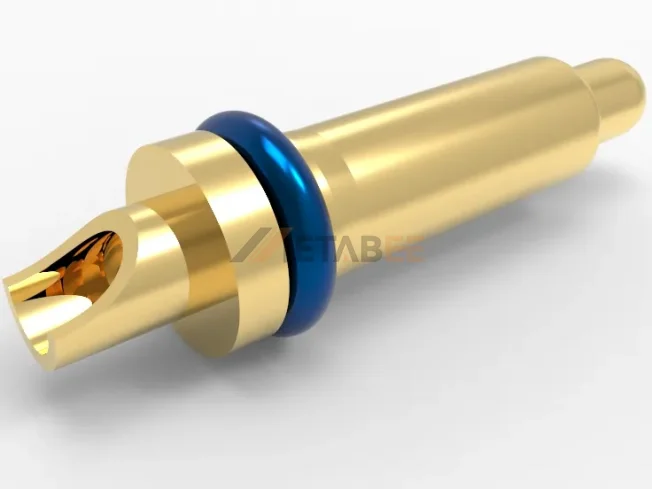
Waterproof pogo pins feature enhanced sealing structures to improve protection against moisture and dust. They are suitable for outdoor devices, industrial equipment, and applications that require reliable electrical contact in harsh environments.
How to Choose the Right Pogo Pin Type?
Choosing the right pogo pin depends on your application requirements. Consider the following factors when selecting a suitable type:
Choosing the right pogo pin depends on your application requirements. Consider the following factors when selecting a suitable type:
- Mounting method
SMT pogo pins are suitable for PCB assembly with automated soldering processes, while through-hole pogo pins provide stronger mechanical support. Press-fit pogo pins are ideal for applications that require solder-free installation. - Available space
Compact designs often require micro pogo pins or low profile pogo pins to reduce installation space while maintaining reliable contact performance. - Electrical requirements
Higher current applications require high current pogo pins to provide improved power transmission and stable electrical performance. - Operating environment
Waterproof pogo pins provide better protection in environments exposed to moisture or dust. Rolling pogo pins help reduce friction and wear in applications that require repeated movement. - Customization needs
When standard pogo pins cannot meet specific requirements, custom pogo pins can be designed with customized dimensions, spring force, stroke, and electrical specifications.
Conclusion
Pogo pins are available in different structures and specifications to meet various connection requirements. From standard SMT pogo pins for PCB applications to specialized designs such as double-ended, waterproof, and high current pogo pins, each type provides advantages for specific use cases.
Selecting the right pogo pin requires considering factors such as mounting method, contact force, working stroke, current rating, and operating environment. If you are unsure which pogo pin type is suitable for your application or need support with a specific design, contact our technical team for professional assistance.
For projects that require customized dimensions or performance specifications, Metabee provides custom pogo pin solutions to help engineers develop reliable connection solutions.
FAQs
Q1: Are micro pogo pins suitable for SMT reflow soldering?
A: Yes. Micro pogo pins are designed for SMT assembly with flat-bottom solder pads, carrier tape packaging, and vacuum nozzle placement. They pass 260°C reflow testing without spring deformation or plating damage, making them suitable for standard reflow soldering processes.
Q2: How do pogo pins work?
A: Pogo pins use a spring-loaded mechanism to maintain electrical contact between two mating surfaces. When compressed, the internal spring creates contact force that keeps the plunger connected with the barrel, ensuring stable current or signal transmission.
Q3: How to use pogo pins?
A: Pogo pins are typically installed on PCBs, test fixtures, charging interfaces, or contact modules.
Q4: How to ensure double-ended pogo pin stability?
A: Double-ended pogo pins use optimized contact surfaces and dual spring structures to provide consistent contact force and reliable conductivity. The vibration-resistant design helps prevent loosening and maintains stable connections during long-term use.
Q5: How long is the lifespan of high current pogo pins?
A: High current pogo pins can achieve a lifespan of up to 500,000 cycles under proper operating conditions. Wear-resistant materials, reliable plating, and optimized contact structures help reduce wear and maintain stable electrical performance during repeated use.
Q6: What are PCB pogo pins?
A: PCB pogo pins are spring-loaded contacts designed for mounting on printed circuit boards. They provide reliable electrical connections between the PCB and mating components, and are commonly available in SMT and through-hole mounting designs.
