
FAQs:
What is an HVIL cable?
An HVIL cable is part of the High Voltage Interlock Loop system in hybrid/electric vehicles. It implements a low-voltage monitoring circuit that runs through all high-voltage components and connectors. If the loop is broken, the system triggers a safe shutdown of the high-voltage system.
How does an HVIL system work?
The system sends a continuous low-voltage signal (typically 12V) through a dedicated loop that runs parallel to the high-voltage circuitry. If a high-voltage connector or component cover is loosened, removed, or compromised, the low-voltage loop is instantly broken (opened).
Why is the HVIL system necessary in electric vehicles (EVs)?
It is necessary for safety. It prevents the high-voltage (HV) system from being energized—or immediately cuts power—if a component is not fully and safely connected. This protects technicians and personnel from the risk of electric shock or arcing when touching high-voltage parts.
What is the key difference between the pins in an HVIL connector?
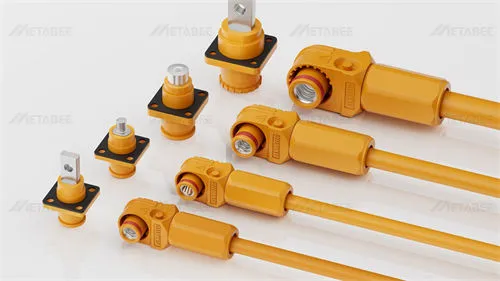
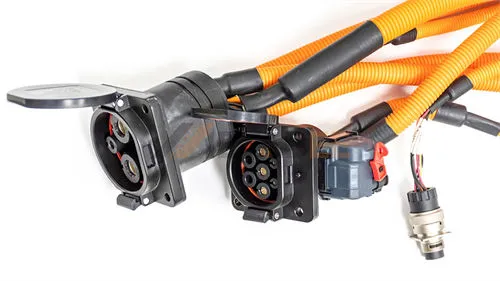
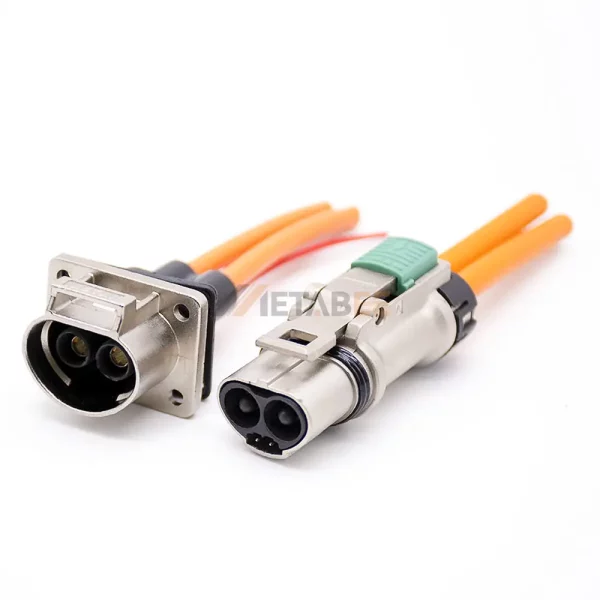
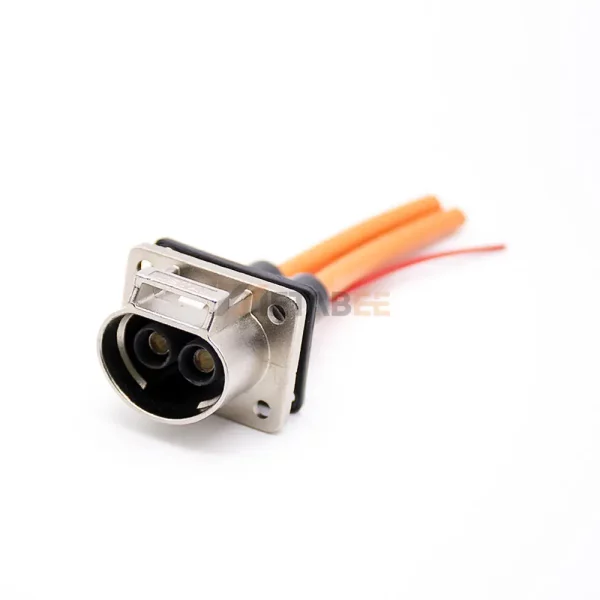
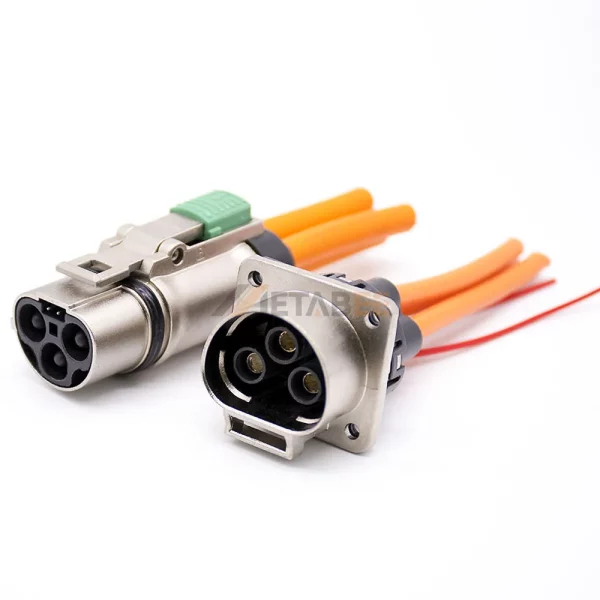
HVIL connectors have two sets of contacts:
High-Voltage (HV) contacts: For power transmission.
Low-Voltage (HVIL) contacts (or pins): For the safety interlock circuit. The HVIL pins are typically shorter than the HV pins.
How does HVIL differ from standard high-voltage cables?
Standard high-voltage cables carry the main power (high voltage, high current). The HVIL cable is a separate, low-voltage monitoring circuit embedded or routed in parallel. Its function is safety monitoring and interlock, not power delivery. The connector design often has shorter interlock pins than the main HV pins so the loop is broken before HV disconnect.
Are HVIL cables shielded?
Yes. The low-voltage HVIL wires are often routed alongside the high-voltage lines within the same cable assembly. They are typically shielded or fully encased to protect the low-voltage signal from Electromagnetic Interference (EMI) generated by the adjacent high-voltage cables.
What specifications and design considerations apply to HVIL cables?
Key design considerations include
Low-voltage loop conductivity
Minimal loop resistance
Fault detection threshold
Shielding against electromagnetic interference (EMI) from nearby HV conductors
Mechanical robustness
Waterproofing/sealing
Proper length/loop layout